
Custom Pool Design & Construction Services in North Texas: Your Guide to Luxury and Resort Style Pools
Custom luxury and resort-style pools combine architectural intent, engineered systems, and high-end finishes to transform North Texas backyards into private retreats. This guide explains what defines a luxury pool in Dallas, how resort-style features in Fort Worth create immersive outdoor living, and the practical steps required for custom inground pool construction across the DFW area. Many homeowners want dramatic visual impact, dependable mechanical systems, and site-specific design that responds to lot lines, climate, and entertainment needs; this article shows how those goals translate into materials, features, timelines, and renovation choices. You will learn signature features like infinity edges and Pebble Tec-style finishes, a step-by-step construction process with typical permitting considerations, renovation options including resurfacing and added spas, and the latest smart and sustainable technologies shaping pools in 2025. Each section includes practical lists, comparison tables, and actionable guidance to help you evaluate design decisions and prepare for contractor conversations about custom pool design and construction in North Texas.
What Are the Key Features of Luxury Pool Designs in Dallas?
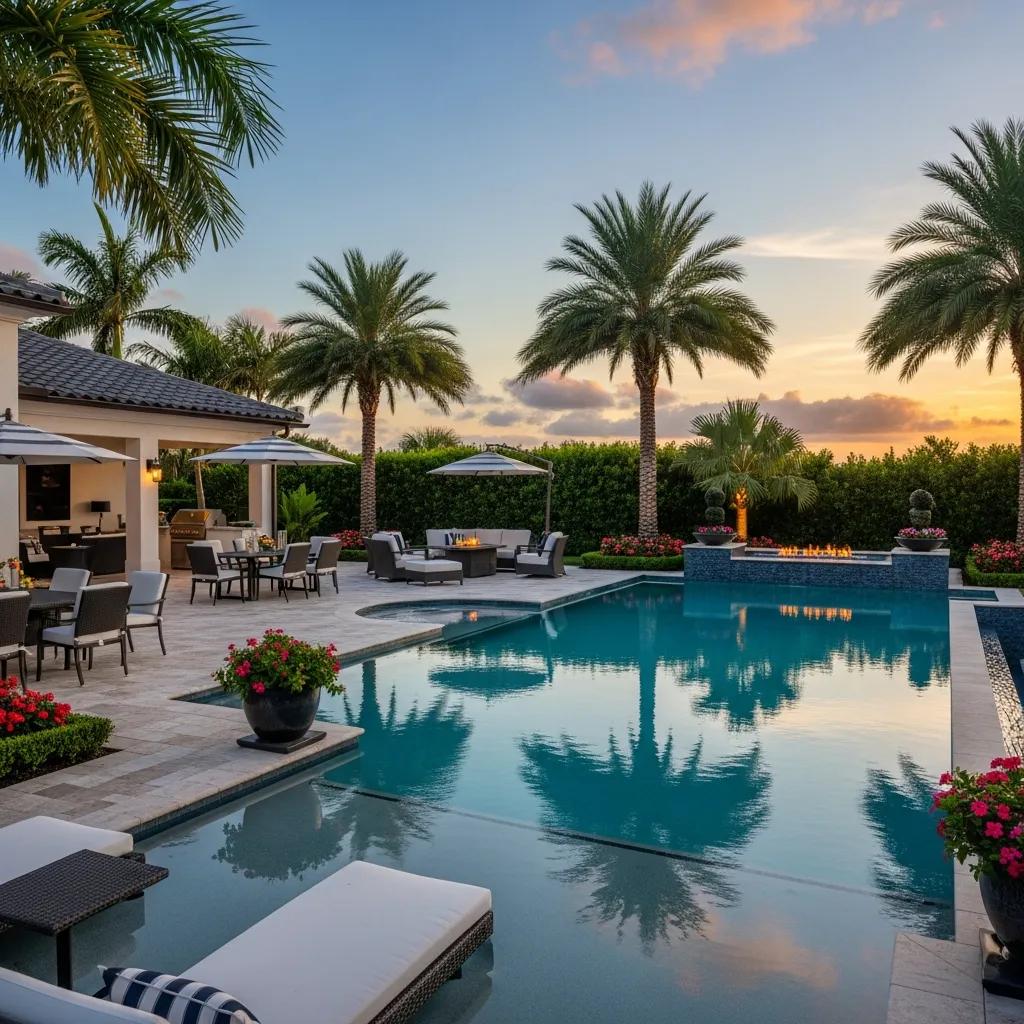
Luxury pool design in Dallas centers on visual integration, premium materials, and curated amenities that create an elevated residential experience. At its core, a luxury pool pairs scale and proportion with refined finishes—features such as infinity edges, integrated spas, fire elements, and designer tile work deliver both dramatic sightlines and functional comfort. These elements work because they combine landscape sightlines with engineered mechanics that maintain water clarity, temperature, and safety while amplifying aesthetic impact. Homeowners choosing luxury finishes must weigh durability in the Texas climate and ongoing maintenance needs to preserve appearance and performance. The next two subsections break down the role of infinity edges and water features, followed by common high-end material and finish choices to inform selection and upkeep.
| Feature | Characteristic | Typical Benefit |
|---|---|---|
| Infinity Edge | Visual continuity with landscape | Creates a seamless horizon and dramatic viewlines |
| Integrated Spa | Shared circulation/heating | Enhances year-round use and spa-to-pool flow |
| Water Feature | Type: waterfall/sheer descent | Adds acoustic ambiance and focal interest |
| Fire Feature | Gas or ethanol accents | Creates evening drama and warmth for gatherings |
This comparison highlights how each luxury element contributes to both ambiance and function, helping you prioritize which features best suit a Dallas site and lifestyle.
How Do Infinity Edge and Water Features Enhance Luxury Pools?
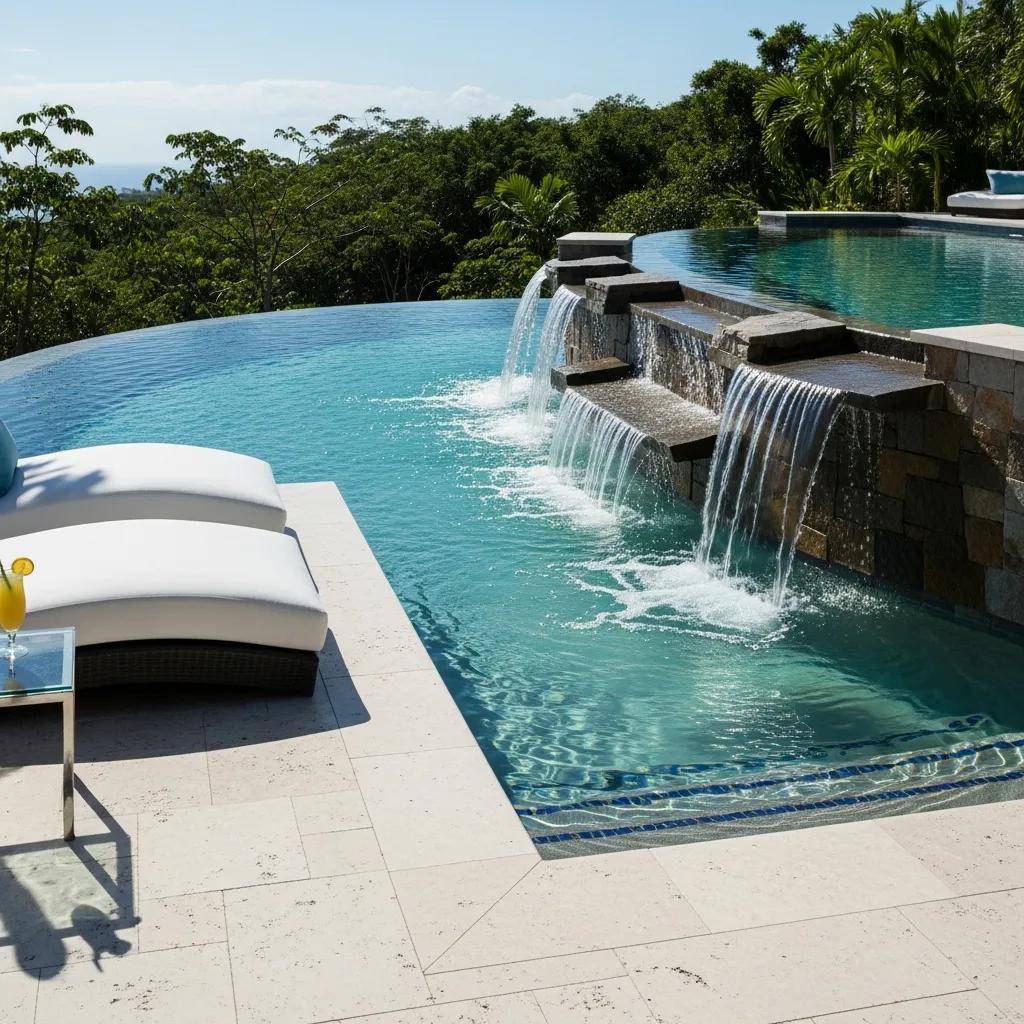
An infinity edge pool enhances luxury by visually extending the water plane to a distant horizon, which reinforces property views and creates a resort-like experience. Technically, an infinity edge requires a catch basin, dedicated pump and return plumbing, and careful grading to ensure consistent sheet flow and easy maintenance. Beyond aesthetics, water features—such as sheer descents, cascading waterfalls, or sculptural jets—add sound masking that increases perceived privacy and reduces urban noise intrusion. These features also influence circulation patterns and pump sizing, meaning early coordination between designer and mechanical contractor is essential to avoid retrofit complications. Considering both visual and mechanical requirements up front reduces surprises during construction and supports long-term performance and enjoyment.
Which High-End Materials and Finishes Are Popular in Dallas?
Premium material choices convey luxury while determining maintenance cycles and tactile appeal—typical options include aggregate finishes (Pebble Tec-style), designer tile, and natural stone coping. Aggregate finishes offer textured color depth and durability in Texas conditions, while glass or ceramic designer tiles create refined accents around waterlines and vanishing edges. Natural stone for coping and raised features provides an upscale feel but requires attention to sealing and potential staining in high-sun exposure. When selecting finishes, consider surface roughness, heat retention, and chemical interaction; these attributes affect slipperiness, comfort for bare feet, and long-term appearance. Balancing aesthetics with durability and ease of maintenance ensures the finished pool remains both luxurious and practical for North Texas living.
How Do Resort Style Pools in Frisco Create a Backyard Oasis?
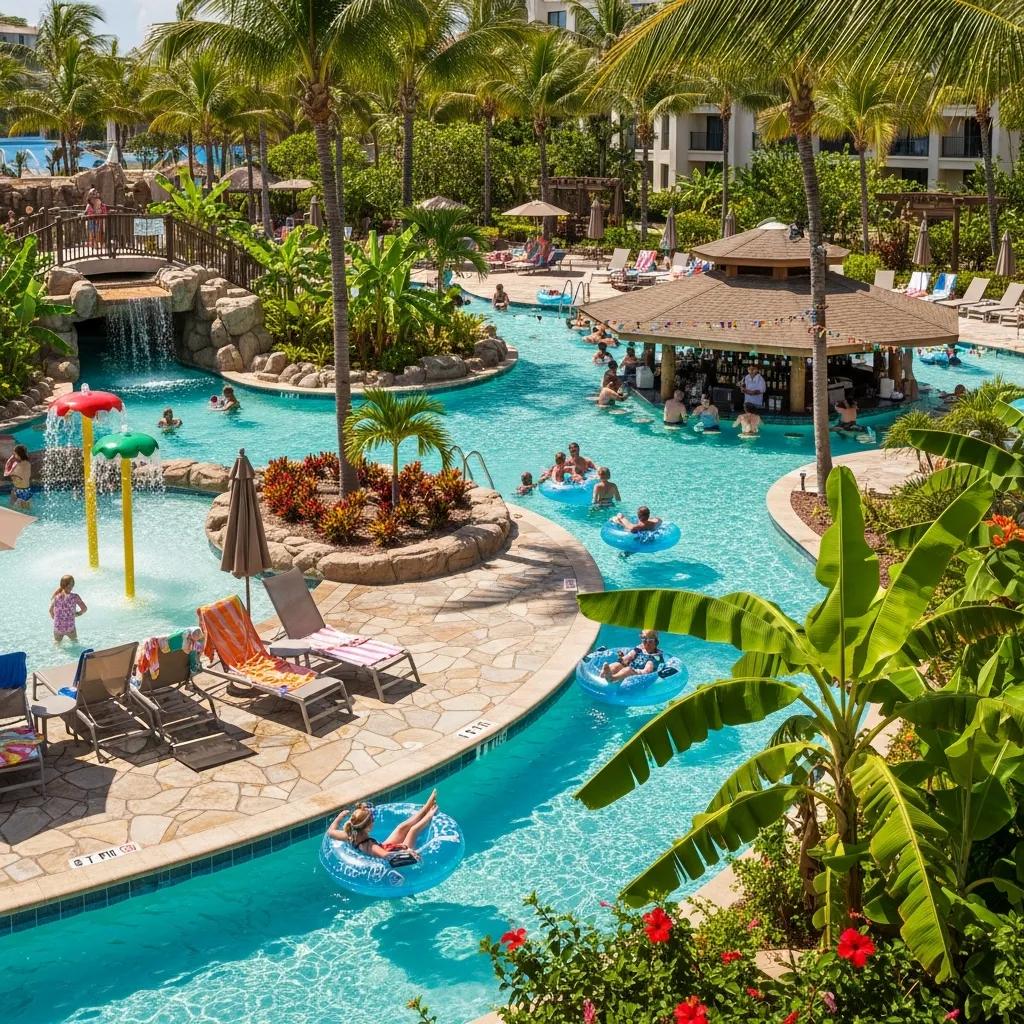
Resort-style pools in Fort Worth emphasize leisure, graduated experiences, and entertainment-driven layouts that transform yards into multi-purpose outdoor destinations. These designs typically arrange zones—such as entry beaches, active swim lanes, and lounging coves—to support simultaneous activities while maintaining aesthetic cohesion. Integrating hardscape, planting, and lighting creates a layered ambiance that reads like a boutique resort; designers select materials and contours that enhance sightlines and encourage flow between pool, kitchen, and cabana areas. Thoughtful mechanical planning ensures large water features and additional amenities remain efficient, and resilient plant palettes minimize irrigation demands. The subsections below outline common resort features and how outdoor living components unify the overall design.
- Lazy rivers, swim-up bars, and grottoes provide varied guest experiences and circulation.
- Beach entries and tanning shelves create shallow play and social lounging zones.
- Integrated lighting, landscaping, and seating define evening ambiance and safety.
These features combine to create flexible, entertainment-focused yards that accommodate both family use and larger gatherings while supporting streamlined maintenance.
What Are Common Resort Style Features Like Lazy Rivers and Swim-Up Bars?
Lazy rivers and swim-up bars act as experiential anchors in resort-style pools: lazy rivers create a meandering circulation path for passive relaxation, whereas swim-up bars concentrate social interaction at the waterline. Lazy rivers require continuous low-head circulation and additional hydraulic design to maintain gentle flow without excessive energy use. Swim-up bars involve below-deck service zones or raised wet decks and require integrated seating, non-slip finishes, and careful plumbing to balance pump demands. Spatially, these features need generous lot area or creative compact solutions—such as looping channels or compact wet bars—to provide the intended amenity without compromising yard function. Proper planning of structural supports and utility access prior to excavation avoids costly retrofits and preserves the guest experience.
How Is Outdoor Living Integrated with Pool Design in Fort Worth?
Outdoor living integration ties pool design to dining, cooking, and shaded lounge areas to make the backyard function as a cohesive entertainment environment. Designers typically zone spaces for dining, lounging, and active play, then specify continuous materials—decking, coping, and accent pavers—to create visual flow between pool and living areas. Practical considerations include shade structures, outdoor HVAC for covered kitchens, and durable finishes that resist heat and frequent use; selecting compatible materials reduces maintenance and extends usable seasons. Lighting design is coordinated across zones to enable evening use and safe circulation, with layered luminaires highlighting focal points and task areas. These integrated solutions ensure pools serve as the hub of outdoor life rather than an isolated element.
What Is the Custom Pool Construction Process in the DFW Area?
The custom pool construction process in the DFW area follows predictable stages: initial consultation and site analysis, design development and permitting, excavation and shell construction, mechanical and electrical installation, finish work and landscaping, then commissioning and client orientation. Each stage has specific deliverables and typical timelines—design and permitting often take several weeks, excavation and shell formation several weeks more, and finishing plus landscaping can extend the schedule depending on complexity. Early engagement with local jurisdictions and HOA requirements reduces permit delays, and selecting finishes and equipment during design accelerates procurement. Below is a practical step-by-step summary followed by an EAV-style timeline explaining typical durations and variables.
- Site consultation and concept development with 3D renderings and preliminary budget.
- Permit-ready design, engineered plans, and permit submission to local authorities.
- Excavation, steel/rebar and shell construction (gunite or other shell types), and initial inspections.
This ordered approach helps homeowners anticipate milestones and personal responsibilities while the next table outlines typical durations and attributes for each phase.
| Phase | Key Task | Typical Duration |
|---|---|---|
| Consultation & Design | Site survey, sketches, 3D renderings | 2–6 weeks |
| Permitting | Plan review, municipal approvals | 2–8 weeks (varies by city) |
| Excavation & Shell | Dig, steel, shotcrete/gunite shell | 1–3 weeks |
| MEP Installation | Plumbing, electrical, filtration, heaters | 1–3 weeks |
| Finishes & Landscaping | Tile, finish, decking, planting | 2–6 weeks |
| Commissioning | Start-up, water balance, client walkthrough | 1 week |
Understanding these stages and typical durations supports realistic expectations and informed scheduling decisions before breaking ground.
How local service providers typically work with clients:
Local builders and designers in North Texas offer collaborative design consultations, 3D visualization, and coordination with permitting authorities to streamline the process. They generally guide homeowners through material selection, equipment sizing, and phasing to align with budget and timeline goals. Homeowners are encouraged to request a custom design consultation early to clarify scope and scheduling.
How Can You Remodel or Renovate Your Existing Pool in North Texas?
Renovation options range from cosmetic refreshes like resurfacing and tile replacement to system upgrades and feature additions such as integrated spas, new water features, or automation retrofits. Renovations extend lifespan, modernize aesthetics, and improve energy efficiency without the need for full replacement, but sometimes structural issues or outdated layouts make replacement more cost-effective. Assessment typically begins with evaluating shell integrity, equipment condition, and finish wear; this informs whether resurfacing, replumbing, or a full rebuild is appropriate. The subsections below explore popular upgrades and resurfacing choices to help homeowners prioritize renovations that deliver the best long-term value and performance.
- Inspect shell for cracks, spalling, or structural movement.
- Evaluate equipment age and efficiency to identify replacement needs.
- Consider aesthetic upgrades like tile, coping, and modern finishes to raise appeal.
This checklist helps homeowners decide whether to pursue targeted upgrades or consider a more comprehensive remodel for improved function and aesthetics.
What Are Popular Upgrades Like Adding Spas and Water Features?
Adding an integrated spa, spillway, or decorative waterfall can dramatically change usage patterns and perceived value of an existing pool. Integrated spas share circulation and heater systems with the pool or can be plumbed separately for independent temperature control; each approach has implications for pump size, heater capacity, and controls. Water features such as spillovers and sheer descents require modifications to filtration return lines and allowances for catch basins or scuppers. Structurally, adding raised elements may require reinforcement of surrounding decking or changes in grading. These upgrades increase enjoyment and resale appeal when designed to complement existing hydraulics and site constraints.
How Does Pool Resurfacing Improve Longevity and Aesthetics?
Resurfacing replaces the pool’s interior finish to restore waterproofing, update color, and refresh texture—common options include pebble/aggregate, quartz blends, and tile. Aggregate finishes offer long-lasting durability and a natural appearance, while quartz and tile provide color consistency and refined lines around water features. Resurfacing typically requires draining the pool, surface preparation, and cure time, with homeowner downtime often in the range of 1–2 weeks depending on finish and weather. Choosing the right finish affects water chemistry and maintenance routines, as some textures are more resistant to staining and chemical imbalance. Selecting a finish that balances aesthetics, longevity, and maintenance needs helps maximize the renovation’s value.
For homeowners seeking an assessment, many local contractors provide renovation consultations and phased packages that prioritize immediate mechanical upgrades and cosmetic refreshes; schedule an in-person evaluation to confirm structural conditions and receive an estimate.
Which Locations in North Texas Offer Specialized Custom Pool Services?
Custom pool services are widely available across North Texas, with design emphasis and permitting nuances varying between Dallas, Fort Worth, and affluent suburbs such as McKinney and Southlake. Urban lots in Dallas often emphasize skyline sightlines and modern finishes suited to compact or view-oriented sites, while Fort Worth projects commonly support larger, resort-style footprints with integrated outdoor living. Suburban areas may present specific grading, privacy screening, and HOA considerations that influence layout and allowed features. Below is a short comparison table showing how location influences design approach and permitting focus, followed by brief notes on service-area expertise.
| Location | Design Emphasis | Permitting/Local Focus |
|---|---|---|
| Dallas | View integration, modern finishes | Urban lot constraints, view easements |
| Fort Worth | Resort-style layouts, larger lots | County permitting, septic/utility review |
| McKinney/Southlake | Privacy, integrated landscaping | HOA approvals, aesthetic guidelines |
What makes local providers useful is familiarity with municipal codes, inspection schedules, and common HOA requirements that frequently determine allowable features and setbacks. Service-area expertise helps streamline approvals and offers practical design suggestions tailored to neighborhood tastes.
What Makes Dallas and Fort Worth Unique for Pool Builders?
Dallas projects often prioritize architecture-driven solutions—vanishing edges, cantilevered decking, and compact but visually impactful layouts to maximize city or neighborhood views. Fort Worth builds commonly leverage larger parcel sizes to create resort-style complexes with meandering circulation and expansive outdoor living areas. Regulatory differences include varied review timelines and distinct barrier code enforcement that affect fence and gate specifications. HOA prevalence in certain neighborhoods further shapes finish choices and visible equipment placement. Recognizing these local distinctions allows builders to craft proposals that meet both aesthetic ambitions and regulatory constraints.
How Do Suburbs Like McKinney and Southlake Cater to Luxury Pool Needs?
Affluent suburbs like McKinney and Southlake emphasize privacy, generous outdoor entertaining spaces, and high-end landscape integration to match homeowner expectations for luxury living. Site planning in these areas often includes privacy walls, strategic tree screening, and grading to create secluded outdoor rooms. Larger lot sizes permit more expansive features—such as separate spa pavilions or full wet-edge wet decks—while demanding continuity in material palettes between house and pool. Local contractors servicing these suburbs commonly maintain relationships with landscape architects and hardscape suppliers to deliver turnkey outdoor living solutions that align with upscale neighborhood aesthetics.
What Are the Latest Trends and Technologies in North Texas Pool Design?
Current trends in North Texas pool design emphasize smart automation, energy-efficient equipment, and sustainable materials that reduce operating costs while improving user convenience. Automation systems now integrate lighting scenes, pump schedules, heater control, and chemical dosing with mobile apps, enabling remote monitoring and reduced manual maintenance. Energy-saving equipment—variable-speed pumps, high-efficiency heaters, and LED lighting—lowers lifecycle costs and aligns with homeowner interest in sustainability. Design trends also include wellness features such as swim jets for exercise, low-sill beach entries for accessibility, and layered lighting effects that emphasize texture and depth after dark. The subsections below describe smart automation and eco-friendly options and their homeowner benefits.
- Smart automation and remote systems for convenience and efficiency.
- Energy-efficient equipment to reduce operating expenses and environmental impact.
- Integrated outdoor living and wellness-focused features for year-round use.
These priorities reflect a market shift toward systems that deliver both lifestyle benefits and measurable operational savings.
How Is Smart Pool Automation Enhancing Convenience and Efficiency?
Smart pool automation centralizes control for pumps, heaters, lighting, and chemical feeders, allowing homeowners to run schedules, monitor system health, and set lighting scenes from mobile devices. Automation reduces energy use by optimizing pump cycles and enabling variable-speed operation, and it simplifies maintenance through remote alerts for temperature or equipment failures. Integration with home automation platforms makes pools part of the broader smart-home ecosystem, enabling scenarios like warming the spa before arrival or activating evening lighting automatically. While initial investment varies by system complexity, the long-term benefits include lower utility costs, improved equipment longevity, and a hands-off ownership experience that many modern homeowners prefer.
What Sustainable and Eco-Friendly Options Are Available for Pools?
Sustainable pool options include variable-speed pumps, LED lighting, high-efficiency heaters, solar heating, pool covers, and saltwater systems that reduce chemical loads. Variable-speed pumps deliver the largest operational savings by matching flow to task, while LED fixtures significantly lower electrical demand for lighting. Solar heating and covers reduce reliance on gas or electric heaters by capturing and retaining solar energy, and efficient filtration systems minimize backwash and water waste. Selecting sustainable finishes and drought-tolerant landscaping around the pool further reduces lifecycle environmental impact. These measures often qualify for utility rebates or incentives and produce measurable reductions in water and energy consumption over time.
- Variable-Speed Pumps: Reduce energy use and operating cost through optimized flow control.
- LED Lighting: Long-life, low-energy option for ambient and accent illumination.
- Solar Heating & Covers: Decrease heater runtime and conserve water through reduced evaporation.
These sustainable strategies combine to lower lifetime costs and environmental footprint while maintaining the luxury and performance owners expect.